

A Practical Fix for Accounts Receivables and eCommerce Teams in Energy
If this sounds familiar, you’re not alone—and you’re not stuck with it.
For energy industry suppliers and service providers, invoicing shouldn’t be this hard. But as operator requirements multiply and global tax mandates tighten, Accounts Receivables (AR) and eCommerce/data teams are feeling the pressure.
The good news? There’s a way to simplify your invoicing process, reduce rework, have more control over your data, and get paid faster—without adding another platform.
The Hidden Drain on Your Team’s Time
\In many supplier organizations, the invoicing process doesn’t live in just one department. It typically involves at least two core teams that approach the process from very different angles:
- AR and billing teams are focused on sending invoices, tracking payment status, managing collections, and ensuring cash flow.
- eCommerce or data integration teams are the ones behind the scenes making sure those invoices can be transmitted in the right format, to the right operator, through the right platform. They handle the technical side—document mapping, field validation, platform connections, and portal integrations.
Without a consistent framework, every new operator brings a new invoicing format, new validation rules, and more chances for mismatches. AR teams chase approvals and payment updates, while eCommerce teams scramble to adapt file structures and document flows.
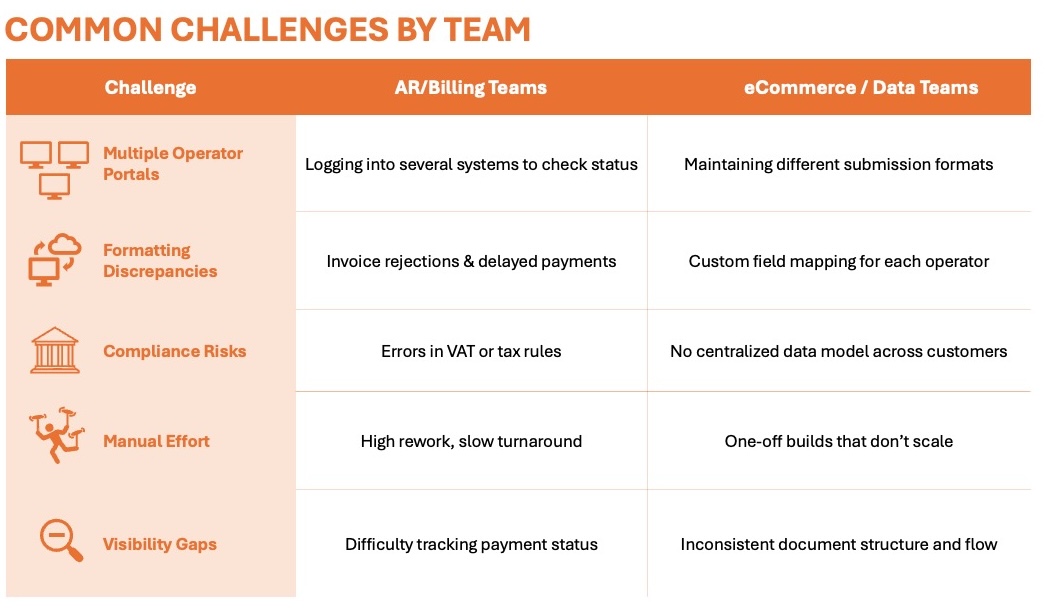
Figure 1: Common Shared Challenges by Team. OFS Portal, 2025.
Different tasks, same root issue: fragmentation.And the cost of this fragmentation adds up—especially for AR teams. Manual invoice processing in AR can cost up to $11.50 per invoice, compared to just $0.71 when automated [1]. High-performing AR teams spend only $0.18 per $1,000 of revenue on receivables processing [2]. Exception handling and rework can lead to 4% of total receivables being written off as bad debt when AR is not automated [3]. Suppliers using automated invoicing see up to a 29% reduction in bad debt write-offs [3]. Average Days Sales Outstanding (DSO) improves by approximately 5 days with AR automation—dropping from 28 to 23 days [4]. Automation also saves 4+ hours per week for AR teams previously spent chasing down late payments [3].
You Can’t Grow What You Can’t Govern
Moving to electronic invoicing isn’t just about sending files faster. It requires accurate, consistent, and compliant invoice data—especially when you’re working with multiple operators across borders.
That means:
- Aligned pricing and tax information
- Validated document structure
- Country-specific compliance (e.g., Brazil NF‑e, Mexico CFDI, Saudi Arabia FATOORAH)
- Clear coordination between AR and eCommerce teams
When data isn’t clean or aligned, invoices get rejected, payments are delayed, and your teams are stuck doing manual rework.
What Does ‘Good’ Look Like in AR?
To understand what efficient AR performance looks like in the energy sector, here are a few key metrics. These benchmarks offer a useful guidepost for suppliers aiming to reduce DSO, avoid bad debt, and improve overall collections—especially when navigating multi-operator invoicing environments.
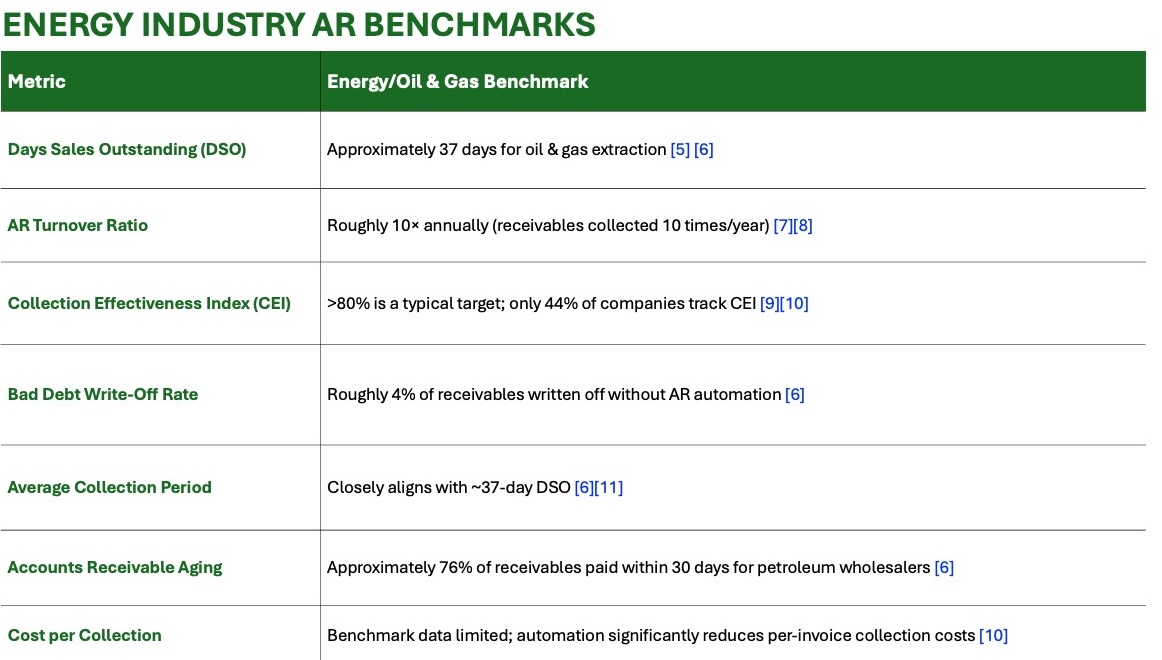
Figure 2: Common Energy Industry AR Benchmarks. OFS Portal, 2025.
Consistent, Compliant & Supplier-Led
At OFS Portal, we help suppliers eliminate the inefficiencies of fragmented invoicing by providing a common, legally grounded framework built on PIDX standards. Instead of developing one-off solutions for each operator, our members use a single, standardized approach that is supported by legal agreements and trusted industry practices.
This isn’t another portal or platform to manage. It’s a scalable model that integrates with your existing ERP, AP, or e-Invoicing systems, works across 650+ global operators, and is governed by the supplier and not a third-party.
By aligning both AR and eCommerce/Data teams under one consistent standard, suppliers see faster payments, fewer errors, and less manual rework. The benefits are shared across teams:
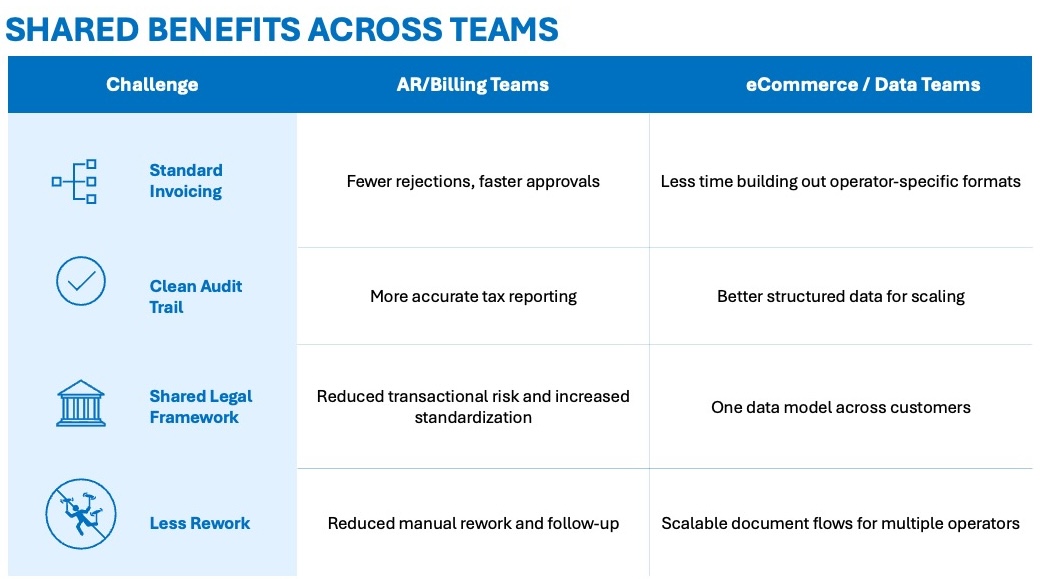
Figure 3: Shared Benefits by Team. OFS Portal, 2025.
As operator platforms evolve and global tax mandates grow more complex, continuing with ad hoc invoicing methods only increases your exposure to risk, delay, and cost.
OFS Portal helps suppliers:
- Standardize invoicing across operators
- Minimize revenue delays and invoice errors
- Meet global compliance mandates with confidence
- Eliminate the need for costly, one-off builds
When your teams operate from the same standard, you move faster, reduce friction—and get paid sooner.
A Smarter Way to Stay Ahead
New tax rules, operator mandates, and platform updates are rolling out faster than ever. If your team is still building one-off workarounds, the risk—and the cost—will keep growing.
With OFS Portal’s membership model, suppliers gain a scalable, legal, and digital framework to support global e-Invoicing with less effort, less rework, and no surprises. It’s not a platform. It’s not a tool. It’s a foundation for working smarter across every transaction.
Want to stop chasing payments and start scaling with confidence?
Join the growing community of energy suppliers using OFS Portal to streamline invoicing, support compliance, and reduce friction across finance and eCommerce.
👉 Explore our affordable subscriber membership tiers at www.ofs-portal.com/membership.
Sources
[1] DocuWare, Which Accounts Receivable Process Would You Choose? $11.50 or 71 Cents per Invoice?
[2] CFO.com, Boosting Efficiency in Accounts Receivable Processing: Metric of the Month.
[3] Resolve Pay, 17 Statistics Linking AR Automation to Lower Bad Debt Write-Offs.
[4] Fidesic, The Power of Combining Accounts Payable Automation with Accounts Receivable Automation.
[5] YayPay, The Ultimate AR Collections Benchmarks.
[6] Dun & Bradstreet, Accounts Receivable and Days Sales Outstanding Industry Report, 2023.
[7] Upflow, Accounts Receivable Turnover Ratio: Formula & Tips, 2024.
[8] CSIMarket, Oil & Gas Integrated Operations Industry Efficiency Information & Trends.
[9] Quadient, The Collection Effectiveness Index (CEI), 2023.
[10] Sungard, Credit & Collections Global Benchmarks Study.
[11] Investopedia, Days Sales Outstanding: Meaning in Finance, Calculation, and Application, 2024.