

When suppliers think about e-invoicing, it’s tempting to zero in on compliance—meeting mandates, aligning systems, managing IT resources. That’s understandable, but there’s a deeper shift happening. Supplier access points are now evolving beyond data connectors; they’re becoming the legal, certified foundation that makes secure, scalable digital transactions possible.
In their simplest form, access points are gateways that allow suppliers and operators to exchange invoices electronically via a four-corner model. But the best ones do much more—they include a legal framework, certified trust, and global readiness built into the core design.
With a solid legal backbone baked into the access point, responsibilities are clearly defined, and data ownership is protected. Certification adds another layer of confidence: providers are vetted and audited, ensuring they meet strong security and global compliance standards. For suppliers, one connection becomes a trusted link not just with one operator, but across the entire certified network.
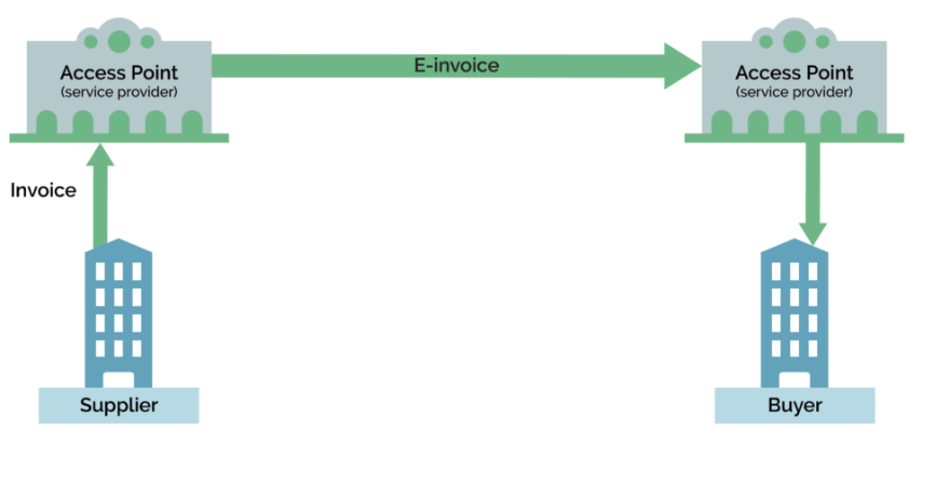
Figure 1: 4-Corner eDelivery. DBNAlliance Exchange Network, 2024.
This is becoming urgent as global e-invoicing regulations expand. In the United States, the Digital Business Networks Alliance (DBNAlliance) is rolling out a national exchange framework to address inefficiencies that cost businesses billions in lost productivity every year [1]. The European Union’s VAT in the Digital Age (ViDA) reforms are expected to roll out mandatory real-time e-invoicing across member states in the coming years [2]. In Latin America, countries such as Brazil and Mexico already block payments when suppliers fail to meet national e-invoicing rules [3]. In other words, the regulatory momentum is only accelerating, and suppliers need a scalable way to keep up.
DBNAlliance provides that model. As a nonprofit governing body, it ensures access points follow common standards for security, certification, and interoperability. Certification through DBNAlliance means once you are connected to one certified access point, you can trust that connection across the entire network [4]. It is a build-once, connect-everywhere model designed to eliminate fragmentation, reduce duplication, and deliver trust at scale.
Because the access point leverages your existing infrastructure—ERP, invoicing systems, and IT resources—the lift is minimal. You are essentially renting a pre-built connection: the access point does the heavy building, while you gain seamless connectivity across operators with little incremental effort.
This is not abstract for OFS Portal. Former OFS Portal CEO, Chris Welsh, was one of the founding architects of DBNAlliance, working alongside e-invoicing leaders from multiple industries to ensure that supplier priorities—data sovereignty, liability, and compliance—were embedded in the framework from the very beginning. That leadership continues to benefit suppliers today by giving them influence over the rules that govern how digital transactions operate.
OFS Portal’s access point, which is EDICOM, puts this model into practice. Every transaction is backed by a standard legal agreement, removing the delays and inconsistencies of one-off negotiations. Because EDICOM is a certified DBNAlliance access point, suppliers connect through a gateway that has been independently audited for compliance and security [5]. With over 650 operators already reachable through this network, suppliers gain immediate access to global frameworks such as SAF-T in Europe, CTC in Latin America, and new real-time reporting mandates in Asia-Pacific. For OFS Portal members, this integration is offered as an exclusive, optional service—discreetly available for those who want to extend their compliance and connectivity without taking on additional IT or legal burdens.
Suppliers that rely on one-off integrations often face three to five times higher IT costs per operator connection [6].
The risks of not adopting this model are significant. Suppliers that rely on one-off integrations often face three to five times higher IT costs per operator connection [6]. In Latin America, a failed e-invoice can mean delayed payments or blocked revenue [3]. Without a legal framework, disputes over data ownership or liability can stall projects at the worst possible time. And in an industry like energy, where transactions are global, regulated, and high value, those risks are magnified.
While energy supply chains provide one of the clearest cases for supplier access points, the same issues apply to manufacturing, logistics, healthcare, and any sector that transacts electronically. The ability to integrate once, comply globally, and protect every transaction is no longer optional. It is the baseline for doing business.
Another advantage is that DBNAlliance enables suppliers to transact across industries without having to adapt to each sector’s unique standard. For companies serving multiple verticals—say, energy and logistics—this removes the costly burden of maintaining parallel compliance frameworks.
Looking ahead, suppliers should prepare for three trends. First, frameworks that establish interoperability and certification will continue to grow in significance for suppliers operating in complex digital ecosystems [4]. Second, anticipate growing emphasis on real-time reporting, extending beyond invoices to include shipping, customs, and tax data [2]. Third, operators will increasingly demand suppliers demonstrate cybersecurity compliance before connecting—a standard that certified access points already meet [5].
Supplier access points are no longer just technical connections. They are the legal, certified, and scalable foundation for digital trade. At OFS Portal, we have been part of this journey from the beginning—helping shape DBNAlliance, building a live model with EDICOM, and ensuring suppliers have a safer, simpler way to connect with operators around the world. For organizations ready to scale securely and confidently, now is the time to adopt the access point model that truly delivers.
The Role of OFS Portal & Its Members
The success of standards like PIDX doesn’t happen in isolation—and it doesn’t happen without collaboration. At OFS Portal, our role is to serve as the steward of a shared framework that makes e-invoicing scalable, secure, and practical. But it’s our community—the suppliers, operators, and service providers using these standards every day—who bring that framework to life.
Together, we’re building technical alignment and creating a community where digital integration is not a burden, but a baseline.
OFS Portal supports this work by:
- Facilitating the use of standardized catalogs and invoices across the supply chain
- Maintaining the legal and operational agreements that enable safe, consistent data exchange
- Providing a neutral, vendor-agnostic environment where all participants—regardless of size—can interoperate on common ground
As new technologies and business practices emerge, OFS Portal helps lead priority initiatives on behalf of our members—supporting the development of new PIDX standards, advocating for necessary updates to existing ones, and ensuring the standards ecosystem keeps pace with operational realities in the field.
And while the frameworks we support are essential, it’s our members who drive adoption. They’re embedding standards into day-to-day processes, helping streamline onboarding, and shaping how energy supply chains evolve—one integration at a time.
Join the growing community of energy suppliers using OFS Portal to streamline invoicing, support compliance, and reduce friction across finance and eCommerce.
👉 Explore our affordable subscriber membership tiers at www.ofs-portal.com/membership.
Works Cited
[1] “Digital Business Network Alliance Launched.” Digital Business Networks Alliance, 2023, https://dbnalliance.org/launch-digital-business-networks-alliance/.
[2] “VAT in the Digital Age (ViDA).” European Commission, 2023, https://taxation-customs.ec.europa.eu/taxation-1/vat-digital-age-vida_en.
[3] “Electronic Invoicing in Latin America.” PwC Tax Insights, 2024, https://www.pwc.com/gx/en/services/tax/electronic-invoicing-latin-america.html.
[4] “What Is the DBNAlliance?” Storecove Blog, 2024, https://www.storecove.com/blog/en/what-is-the-dbnalliance/.
[5] “The United States Begins an Electronic Invoicing Pilot Project.” EDICOM Group, 2023, https://edicomgroup.com/blog/the-united-states-begins-an-electronic-invoicing-pilot-project.
[6] Ariba Network Benchmarking Report. SAP Ariba, 2022, https://www.sap.com/products/business-network/ariba-network.html.